Body image and addiction recovery don’t always get talked about together, but they should. Recovery changes your body. Weight can go up or down. You might deal with bloating, exhaustion, hormone swings, or medication side effects you didn’t expect. For many women, this part feels like a curveball. You’re doing the hard work of getting sober, and suddenly your body feels unfamiliar. That can be frustrating, confusing, or even discouraging.
This isn’t about forcing yourself to love every inch of your body overnight. It’s not about pretending the changes don’t bother you. It’s about rebuilding trust with your body and with yourself. In body image and addiction recovery, healing isn’t just emotional. It’s physical, too. And learning to work with your body instead of fighting against it is part of the process.
Body Image and Addiction Recovery: How Addiction Impacts Body Image
Addiction often starts as a way to not feel. Substances can numb anxiety, quiet intrusive thoughts, or help someone disconnect from a body that feels overwhelming or unsafe. For some women, using became a way to escape how they felt in their own skin. If you don’t have to fully feel your own body, you don’t have to deal with the discomfort that comes with it.
Sometimes substances are also used to control appetite, weight, or emotions. Maybe it dulled hunger. Maybe it gave a rush that felt better than self-criticism. Maybe it simply took the edge off long enough to get through the day. Over time, though, shame creeps in about appearance, behaviors, and how far things have come. The body can start to feel like the enemy. Something to fight, ignore, or punish. In body image and addiction recovery, part of healing is facing that truth without tearing yourself apart for it.
Body Image and Addiction Recovery: Why it Can Feel Harder in Early Recovery
Early recovery can make body image feel worse before it feels better. Your metabolism shifts. Your appetite comes back, sometimes strong. Your body is trying to stabilize after months or years of stress, dehydration, poor sleep, and chemicals running the show. It’s not “letting itself go.” It’s trying to survive and recalibrate.
At the same time, your emotions come back online. Without substances numbing everything out, you feel more - hunger, fullness, discomfort, insecurity - all of it. And it’s easy to compare yourself to how you looked while using. Maybe you were thinner. Maybe your face looked different. The goal isn’t to get back to how you looked at your lowest. The goal is to build a body that can actually support your life.
Body Image and Addiction Recovery: Practical Ways to Rebuild Awareness and Acceptance
Body acceptance is built through small, daily shifts in how you speak to yourself and care for your body.
When you catch yourself thinking, “I hate my stomach.” Pause. Take a breath. And try, “My body is adjusting.” That’s it. You don’t have to jump to, “I love my body.” Neutral is enough. Neutral creates space. And space is where trust starts to grow.
Set aside a few quiet minutes each day and ask:
- Am I hungry?
- Am I tired?
- Where am I holding tension?
Early recovery can blur basic signals. Relearning them is powerful. Meeting a need instead of ignoring it builds safety with your body.
Choose gentle movement. Stretch. Walk. Try yoga. Lift light weights. Focus on how it feels, not how it looks or how many calories it burns. The goal isn’t to shrink your body. The goal is to reconnect with it.
Dress the body you have now, not the one from before. Not the one in old photos. Clothes that pinch, squeeze, or “motivate” usually just shame. Comfort sends a different message: I deserve to feel okay today.
Limit comparison triggers. If social media leaves you spiraling, unfollow. If old photos pull you backward, put them away. Unrealistic standards don’t get a vote in your recovery.
Work with professionals. Therapists trained in trauma, eating disorders, or somatic work can help you untangle the deeper layers. You don’t have to figure this out alone. Body image and addiction recovery are both heavy. Support makes them lighter.
Body Image and Addiction Recovery: Coming Back Home to Yourself
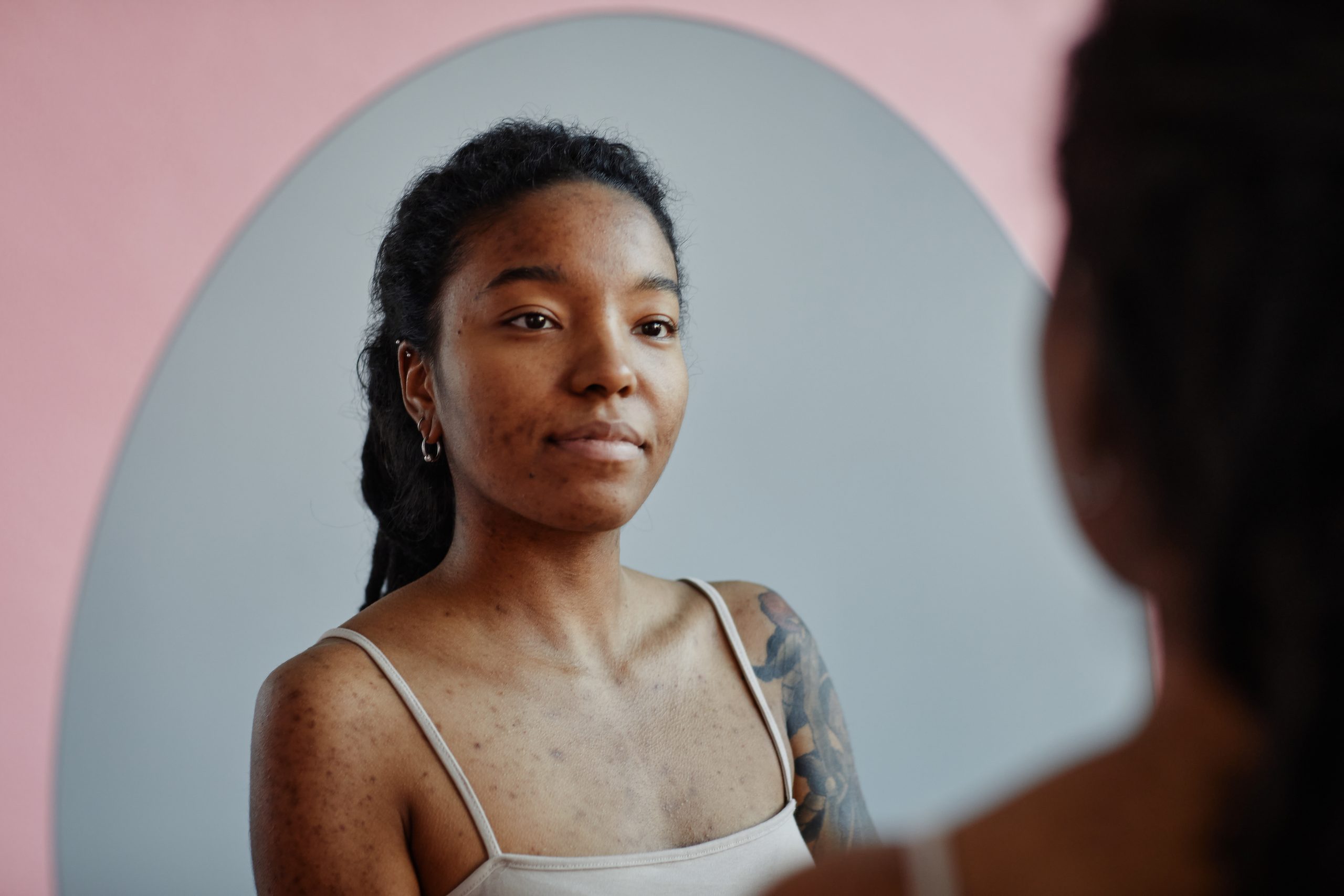
Your body isn’t the enemy. It carried you through addiction. It absorbed the stress, the chaos, the survival mode. And now it’s carrying you through recovery. That matters! Even if you don’t love what you see in the mirror right now, your body has been fighting for you this whole time.
Body image and addiction recovery both ask the same thing: patience. Healing doesn’t happen all at once. Trust doesn’t rebuild overnight. But little by little, as you nourish yourself, rest, move gently, and speak kindly to yourself, something shifts. Recovery isn’t just about sobriety. It’s about coming back home to yourself and learning that your body is part of that home.
At Twin Branch Wellness & Recovery for Women, we support women through every step of recovery. Our trauma-informed addiction treatment is tailored to women and paired with therapy focused on body image, eating disorders, mental health, and the nervous system. With individual counseling, group therapy, holistic practices, and a strong community, we help women rebuild trust with their bodies and themselves. Lasting recovery isn't just about stopping a substance—it's about building a life you feel steady living in.