
A Mental Health Check-In for World Mental Health Day
Life can get busy quickly. Between work, family, relationships, responsibilities, and the expectations we place on ourselves, it’s easy to spend so much time taking care of everyone else that we forget to check in with ourselves. We push through stressful days, set aside difficult feelings, and tell ourselves we’ll slow down when things settle. But when was the last time you truly paused to ask yourself how you’re doing? This World Mental Health Day, take a moment for a mental health check-in. Not to judge yourself or find something to fix, but to give yourself the time and space to recognize what you’re feeling, what you might need, and how you can better care for yourself.
Why a Mental Health Check-In Matters
For many women, caring for others can feel like second nature. You might be that person who friends turn to for advice, the one who keeps things running at home, or the coworker who always seems to have it together. You may be juggling several roles at once, leaving little room to think about how all those responsibilities are affecting you.
Over time, that constant giving can leave you feeling overwhelmed, exhausted, disconnected, or unsure of what you need. Sometimes, you might not even realize how much you're carrying until you finally have a quiet moment to yourself.
That’s why a mental health check-in matters. It gives you a chance to slow down and notice what’s happening beneath the surface. Maybe you’ve been feeling more anxious than usual. Maybe you’re frustrated more easily, struggling to find motivation, or feeling emotionally drained. Perhaps nothing feels particularly wrong, but you know you haven’t felt quite like yourself lately.
Whatever you're experiencing, your feelings deserve attention.
Checking in with yourself doesn’t mean you need to have all the answers. It simply means being willing to listen to yourself without immediately brushing your feelings aside. It means recognizing that your mental health matters just as much as the well-being of the people you care about.
And remember, you don't have to wait until you're struggling to make time for yourself. Regular check-ins can help you spot patterns, understand your needs, and notice when something needs to change.
Give Yourself Permission to Slow Down
It can be difficult to slow down when your to-do list never seems to end. You might feel guilty taking a break, worry about letting someone down, or believe you should be able to handle everything on your own.
But you don't have to earn rest, and asking for help doesn't mean you've failed.
Sometimes, caring for yourself looks like taking a few deep breaths between responsibilities. It might mean saying no to something you don't have the capacity for, stepping away from your phone, spending time outside, or making space for a conversation you've been putting off.
Other times, it might mean acknowledging that what you're experiencing is bigger than what a little rest can resolve. If stress, anxiety, sadness, or other difficult feelings are affecting your daily life, relationships, or ability to function, reaching out to a mental health professional can be an important next step.
You deserve support before you reach a breaking point. You don't have to wait until things feel unbearable to ask for help.
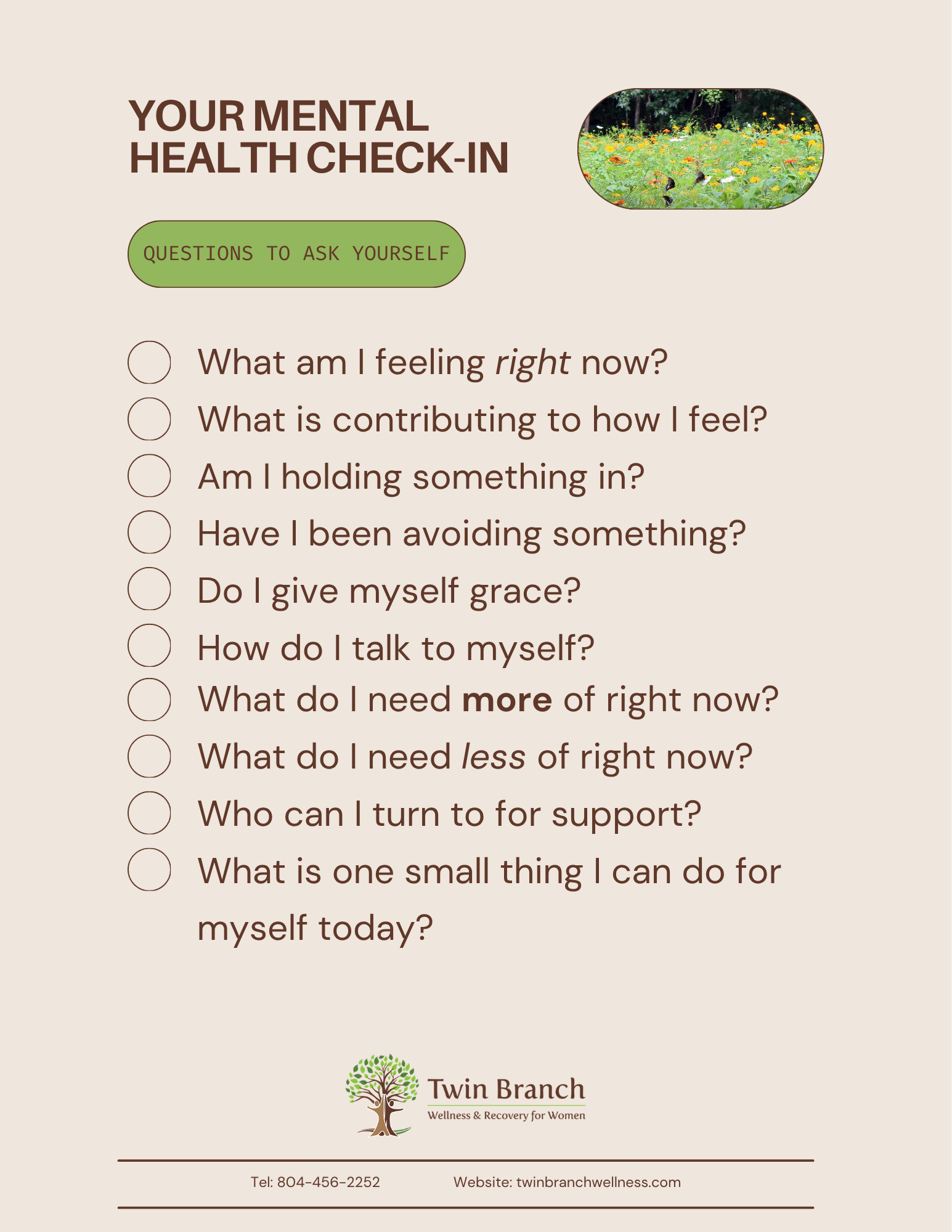
Your Mental Health Check-In: Questions to Ask Yourself
Now, take a breath. If you can, give yourself a few minutes without distractions. Find a quiet place, grab a journal, or simply sit with your thoughts.
There are no right or wrong answers to these questions. You don't have to work through every feeling today, and you don't need to turn your answers into a list of things to fix. The goal is to understand yourself a little better.
As you move through this mental health check-in, try to approach yourself with the same kindness and patience you would offer someone you love.
1. What am I feeling right now? Before you move on to the next task or tell yourself you're fine, take a moment to name what you're experiencing.
Are you feeling happy, anxious, overwhelmed, frustrated, lonely, hopeful, exhausted, or something else entirely? Are you experiencing several emotions at once?
You don't need to justify your feelings or decide whether they're reasonable. Simply acknowledging them is a meaningful place to start.
2. What might be contributing to how I'm feeling? Think about what's been happening in your life lately.
Have you been dealing with extra stress at work? Are you navigating a difficult relationship, a major life change, financial concerns, family responsibilities, or uncertainty about the future? Have you been taking on more than you realistically have the energy or time to manage?
You may not be able to pinpoint one specific cause, and that's okay. Sometimes, it's a combination of little things that gradually becomes too much to carry.
3. Am I carrying something I haven't talked about? Consider whether you've been keeping something to yourself.
Maybe you've been trying to stay strong for someone else. Maybe you're worried about being judged, disappointing others, or becoming a burden. Or perhaps you haven't had the words to explain what you're going through.
You don't have to share everything with everyone. But you deserve people in your life you can be honest with. Talking to someone you trust or a mental health professional can help you process feelings that have been difficult to hold on your own.
4. Have I been avoiding something? Is there a conversation, decision, responsibility, or emotion you've been putting off?
Avoidance can sometimes offer temporary relief, especially when something feels uncomfortable or overwhelming. But what we avoid doesn't always go away. Sometimes they keep weighing on us in the background.
Think about whether there's a small, manageable step you could take. You don't have to solve the entire problem today. Acknowledging it and deciding what support you need may be enough for now.
5. Have I been giving myself the same care I give others? Think about how you show up for the people you love. You might offer them patience when they're struggling, encourage them to rest when they're tired, or remind them that they don't have to do everything perfectly.
Now, ask yourself whether you're offering that same understanding to yourself.
Are you allowing yourself to make mistakes? Are you respecting your limits? Are you giving yourself room to rest without feeling guilty?
You deserve the same kindness you so freely give to others.
6. What have I been telling myself lately? Pay attention to the way you speak to yourself, especially when things don't go as planned.
Have your thoughts been encouraging and compassionate, or have you been criticizing yourself, comparing yourself to others, or feeling like you're never doing enough?
You may not be able to change every negative thought that comes up, but you can start noticing it. Try asking yourself whether you'd speak to a friend the same way. If the answer is no, consider what a kinder, more balanced response might sound like.
7. What do I need more of right now? Instead of focusing only on what you need to accomplish, consider what might help you feel more supported.
Do you need more rest, time alone, connection with loved ones, movement, structure, or a break from certain responsibilities? Do you need to ask for help, set a boundary, or make time for something that brings you joy?
Your needs may change from day to day. Giving yourself permission to recognize them is part of taking care of your mental health.
8. What might I need less of? Sometimes, caring for yourself means adding something to your routine. Other times, it means recognizing what is taking too much out of you.
Are you overcommitting yourself? Do you spend too much time comparing your life to what you see online? Saying yes when you really want to say no? Taking responsibility for things that aren't yours to carry?
You may not be able to remove every source of stress, but even one small boundary can make a difference.
9. Who can I turn to when I need support? Think about the people who make you feel safe, heard, and understood.
Is there a friend, family member, partner, counselor, or therapist you feel comfortable talking to? If you've been struggling, have you reached out, or have you been trying to manage everything alone?
If you aren't sure where to start, that's okay, too. You can begin with a simple statement like, "I've been having a hard time lately, and I could use someone to talk to."
You don't have to explain everything perfectly to deserve support.
10. What is one small thing I can do for myself today? You don't need to overhaul your life after a mental health check-in. In fact, putting pressure on yourself to make big changes can sometimes add to the stress you're already experiencing.
Instead, choose one small, realistic step.
Maybe you'll take a proper lunch break, go for a walk, reach out to someone you miss, write down what's on your mind, or give yourself permission to rest tonight. Maybe you'll schedule a therapist appointment or ask someone for help with something you've been struggling to manage.
Whatever you choose, make it something that supports you, not another task you feel obligated to complete.
Remember: small steps count, and you don't have to figure everything out at once.
Your Mental Health Check-In Doesn't End Here
Checking in with yourself isn't a one-time exercise. Your feelings, circumstances, and needs will change throughout your life, and that's completely normal. Some days, you might feel grounded and connected to yourself. Other days, you might feel overwhelmed, uncertain, or simply tired of trying to keep everything together.
On those harder days, try to meet yourself with compassion instead of criticism. You don't have to dismiss your feelings, compare your struggles to someone else's, or convince yourself that things could be worse. What you're experiencing matters, even if you can't fully explain it yet.
Self-reflection can help you better understand what you're going through, but you don't have to navigate every challenge on your own. If difficult feelings persist, get harder to manage, or interfere with your daily life, reaching out for professional support is a meaningful act of self-care.
You deserve to feel heard. You deserve to feel supported. You deserve care that sees you as a whole person, not just everything you do for everyone else.
How Twin Branch Wellness & Recovery for Women Can Help
At Twin Branch Wellness & Recovery for Women, we believe women deserve a safe, supportive space to focus on their well-being and find a path forward. We understand that every woman's experiences, challenges, and needs are different, and seeking help can be an important first step toward meaningful change.
Whether you're navigating emotional challenges, feeling overwhelmed by life's demands, or recognizing you need more support than you have right now, you don't have to figure it all out alone. Twin Branch is dedicated to helping women access compassionate, individualized support as they work toward healing, growth, and lasting wellness.
World Mental Health Day reminds us to make space for conversations about mental health, but caring for yourself matters every day. So, take a breath. Check in with yourself. Give yourself permission to ask for help when you need it.
You spend so much time showing up for others. You deserve to show up for yourself, too.
Learn more about Twin Branch Wellness & Recovery for Women and explore how we can support you on your journey toward wellness.
Download our free checklist and save it for easy reference whenever you need it!